
Constipation on a GLP-1 medicine is common, and it is usually manageable. The medicine slows digestion, and eating less means taking in less fiber and fluid. The fix is a steady routine: more water, fiber added gradually, regular meals, daily movement, and a stool softener if your clinician agrees. Nausea often comes with it, so we cover that too.
TL;DR
- Stomach and gut symptoms are the most frequent side effects of GLP-1 medicines. They affect 40–70% of treated patients, so you are far from alone.
- Start with fluids (about 2 to 3 liters a day, mostly water), fiber from food, regular meals and a daily walk.
- Stool softeners or over-the-counter laxatives can help. Check with your prescriber or pharmacist before you start one.
- Nausea tends to fade within days. Smaller, bland, low-fat meals and staying upright after eating help.
- Call your healthcare provider if you have no bowel movement for 3 days, or if constipation comes with vomiting, severe pain or blood in the stool.
Table of Contents
- Why GLP-1 medicines cause constipation and nausea
- How long constipation and nausea last
- Constipation relief: seven steps to try first
- A sample day that supports regularity
- Nausea relief while you adjust
- When to call your healthcare provider
- Perspective: how we think about side effects
- Support your routine with Medcare Supply
- Planning ahead: a simple first-month checklist
- FAQ
- Sources
Why GLP-1 medicines cause constipation and nausea
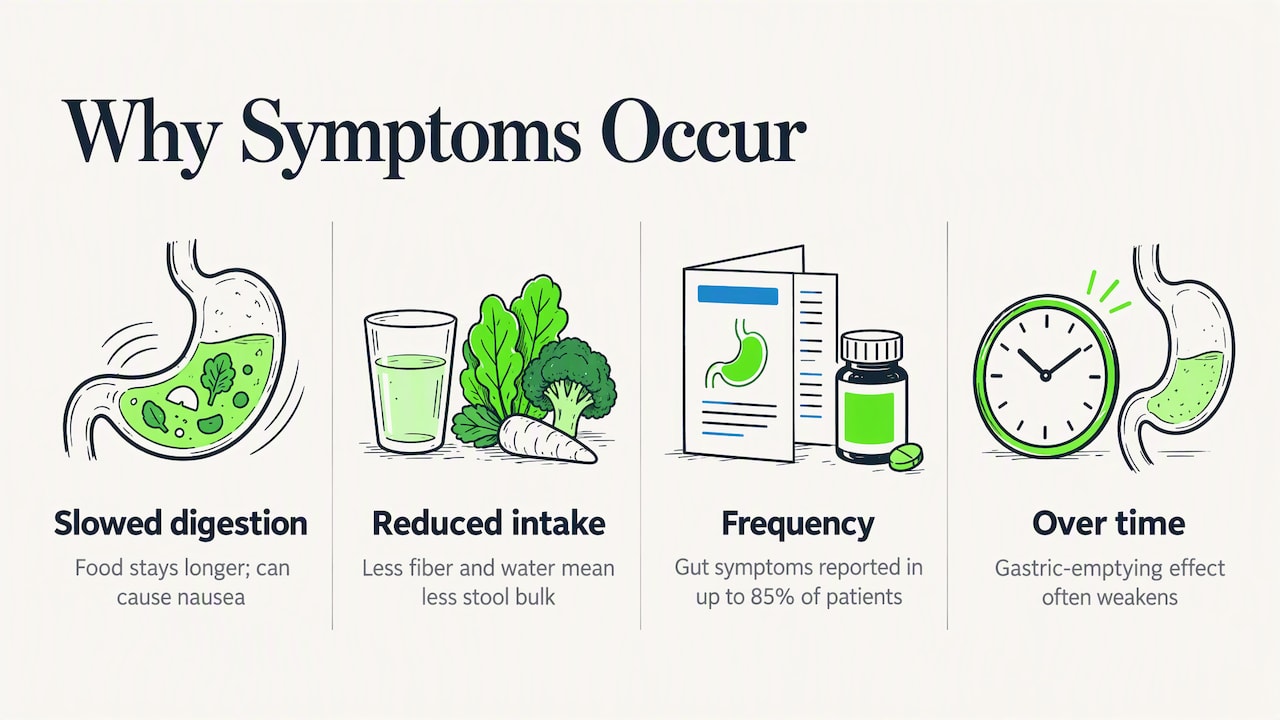
GLP-1 medicines mimic a gut hormone that tells your body you are full. Part of that effect is slower movement of food through the stomach and intestines. That is why you feel satisfied on small portions. It is also why stools can become harder, drier and less frequent.
There is a second cause that people overlook. When your appetite drops, you eat less food and drink less fluid. Less fiber and less water means less bulk and moisture in the stool. The medicine and the smaller intake work together.
Nausea comes from the same slowed digestion. Food stays in the stomach longer, and eating too much or too fast makes you feel sick. Researchers describe these gut symptoms as the most frequent adverse events of GLP-1 receptor agonists, reported in up to 85% of patients in some studies.
The picture is not fully simple. Some research notes that the effect on gastric emptying often weakens over time, which suggests that symptoms lasting for months may have causes beyond delayed emptying. Another reason to talk to your clinician if things drag on.
How long constipation and nausea last
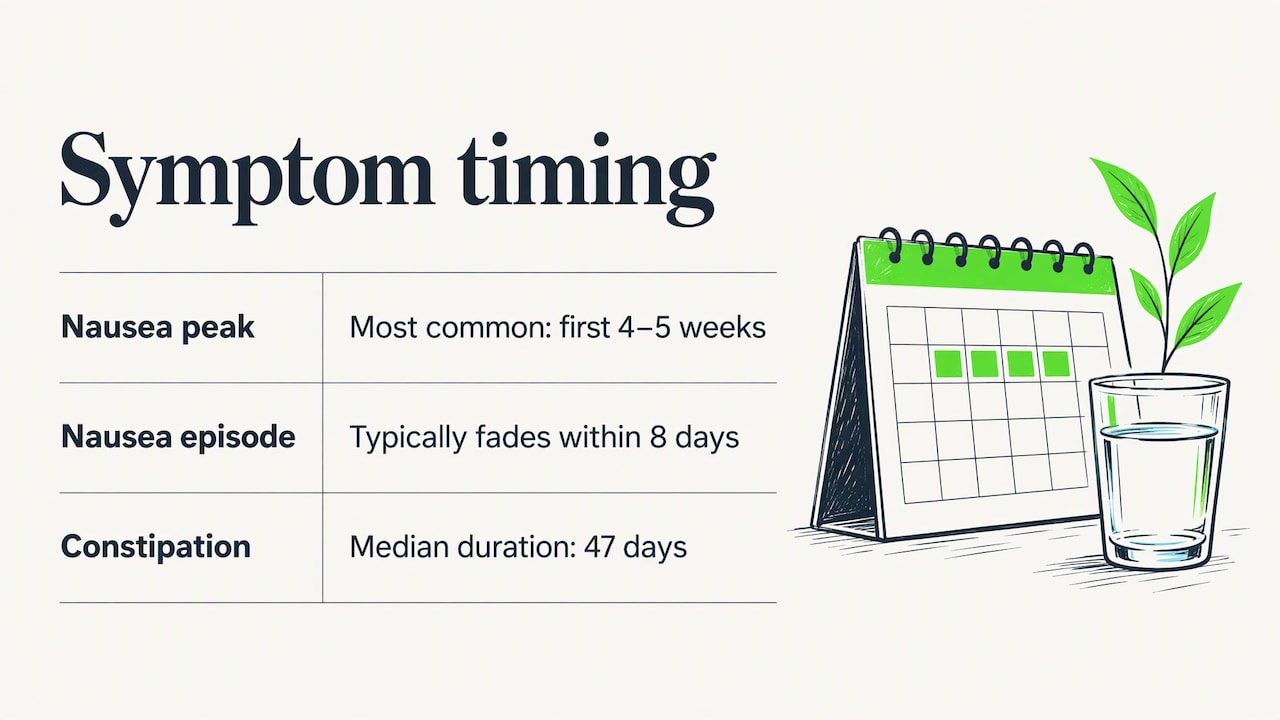
Nausea is usually the shorter problem. It is most common in the first 4 to 5 weeks of treatment, and an individual episode typically fades within 8 days of starting.
Constipation can hang around longer. In the same clinical review, constipation in people with obesity lasted a median of 47 days. That is about seven weeks, so treat it as something to manage, not something to wait out.
Clinicians are also encouraged to tell patients that mild-to-moderate stomach and gut symptoms do not mean the treatment is going wrong. If symptoms persist despite the steps below, inform your healthcare professional.
Dose changes are a common trigger. Many people notice symptoms right after starting or after stepping up a dose. Keep a short note of when symptoms begin so your clinician can see the pattern.
Constipation relief: seven steps to try first
1. Drink enough, all day
A recent clinical guide in JAMA Internal Medicine suggests 2 to 3 liters of fluid daily, mainly water. That is roughly 68 to 101 ounces. If your appetite is low, you may forget to drink, so use habits instead of thirst:
- Keep a bottle within reach and refill it on a schedule.
- Sip small amounts often rather than large glasses at once.
- Add a warm drink in the morning to help trigger a bowel movement.
- If you feel full quickly, choose clear, fresh drinks in small sips.
2. Add fiber gradually
The same guidance recommends both soluble and insoluble fiber. Soluble fiber softens stool. Insoluble fiber adds bulk. Together they keep things moving.
| Fiber type | What it does | Easy food sources |
|---|---|---|
| Soluble | Absorbs water, softens stool | Oats, chia seeds, beans, lentils, apples, citrus |
| Insoluble | Adds bulk, speeds passage | Whole grains, wheat bran, nuts, vegetable skins, leafy greens |
Go slowly. A sudden jump in fiber on top of slowed digestion can cause gas and bloating. Add one extra serving every few days, and increase water at the same time. Fiber without fluid can make constipation worse.
3. Do not let small appetite become under-eating
Should you keep eating when you are constipated? Yes, but in a way that suits a smaller appetite. Clinical guidance advises that you eat slowly, take smaller portions, choose a balanced diet and stop when you feel full. Make the foods you do eat count:
- Build each small meal around vegetables, fruit, beans or whole grains.
- Pair them with protein so you stay nourished.
- Eat at regular times, even if you are not very hungry.
- Skip heavy, greasy meals, which sit in the stomach longer.
If you cannot manage three meals, try smaller, more frequent ones. Regular meals help trigger the natural reflex that moves stool along.
4. Move every day
The research advises increasing physical activity alongside fiber and fluids. A 10 to 20 minute walk after a meal is a simple start. Movement stimulates the intestines, and it supports muscle while you lose weight.
5. Build a bathroom routine
Pick a regular time, often after breakfast or a warm drink, and give yourself a few unhurried minutes. Do not ignore the urge when it comes. Putting your feet on a small stool can make passing stool easier. Straining hard is a sign to step back and try the other steps instead.
6. Consider a stool softener or laxative
Guidance for patients says to consider over-the-counter stool softeners or laxatives when diet and fluids are not enough. A clinical review likewise says patients with constipation should consider using stool softeners.
Some practical points:
- Ask your prescriber or pharmacist which type suits you, especially if you take other medicines or have a bowel condition.
- Follow the label on dose and length of use.
- Use it as a bridge while you build the habits above, not as a substitute for them.
7. Track what works
Write down your water, fiber, activity and bowel movements for two weeks. Patterns appear quickly. You may find that a dose day is your worst day, or that skipping breakfast makes the next day harder.
A sample day that supports regularity
This is an example, not medical advice. Adjust it to your appetite and any dietary needs.
| Time | Idea |
|---|---|
| Morning | Warm water or tea, then oatmeal with chia seeds and berries |
| Mid-morning | A glass of water and a piece of fruit |
| Lunch | Small bowl of lentil soup with whole-grain toast |
| Afternoon | Short walk, then yogurt with nuts |
| Dinner | Baked fish or chicken, cooked vegetables, a small portion of brown rice |
| Evening | Water in small sips, a gentle stroll |
If any of these foods upset your stomach, swap in something plainer. The goal is steady intake of fiber and fluid, not a perfect menu.
Nausea relief while you adjust
Many readers searching for constipation help are also dealing with nausea. The advice overlaps, with a few differences.
Clinical recommendations for GLP-1 related nausea are to eat smaller, more frequent meals and choose easy-to-digest, low-fat or bland foods. The same review advises avoiding strong smells and not lying down right after eating. To reduce nausea, also avoid spicy foods.
In practice:
- Stop eating when you feel full, not when the plate is empty.
- Choose crackers, toast, rice, bananas, broth or plain chicken on rough days.
- Sip clear fluids slowly rather than gulping.
- Stay upright for a couple of hours after a meal.
- Avoid fried, fatty and very sweet foods.
Tension can exist between the two problems. Fiber-rich foods can feel heavy when you are nauseated. On those days, lean on fluids and soft fiber such as stewed fruit, oatmeal or well-cooked vegetables, and return to the bigger portions when you feel better.
When to call your healthcare provider
Most GLP-1 digestive trouble is uncomfortable but not dangerous. Some signs need attention.
Constipation warning signs
MedlinePlus says to contact a provider if you have had no bowel movement for 3 days, or if constipation comes with bloating, stomach pain, nausea, vomiting or blood in the stool.
One health news source lists signs that call for immediate medical attention: being unable to pass gas, blood in the stool or after wiping, abdominal or low-back pain, fever, or vomiting, especially of undigested food. Severe or lasting constipation can signal a serious problem, so do not wait it out.
Nausea warning signs
MedlinePlus advises getting in touch with a provider if nausea or vomiting stops you keeping food or liquid down, if you vomit three or more times in a day, if nausea lasts more than 48 hours, or if you have weakness, fever or stomach pain. It also lists having passed no urine for 8 hours or more, a sign of dehydration.
Before you start
Clinical guidance says patients should be assessed for existing gut conditions such as gastroparesis before starting GLP-1 therapy, since these may call for caution or avoiding the medicine. If you have a history of slow stomach emptying or chronic bowel problems, raise it with your prescriber first.
Perspective: how we think about side effects
We talk with customers every day who want real results and also want to feel well on the way there. Our view is simple: side effects are part of the conversation from day one, not an afterthought.
GLP-1 based products work by acting on the hormones that regulate appetite and fullness. That is exactly why digestion changes. Constipation and nausea are the most common concerns we hear about, and the good news is that small habits make a large difference: fluids, fiber, regular meals and movement.
We believe an informed customer gets the best outcome. That means starting with a plan for hydration and meals before the first dose, listening to your body, and keeping your healthcare professional in the loop. Our range is built for people who take their transformation seriously, and we want you to shop with confidence and then feel good while you use what you buy.
Total body transformation is a journey, and a comfortable gut makes it easier to stay on track.
Terry
Support your routine with Medcare Supply
If you are planning a weight management program, we offer a range of peptide-based products, including GLP-1 related options, with secure payments, free worldwide shipping, easy returns and order tracking. Browse the full shop or start from our home page to see what is available.
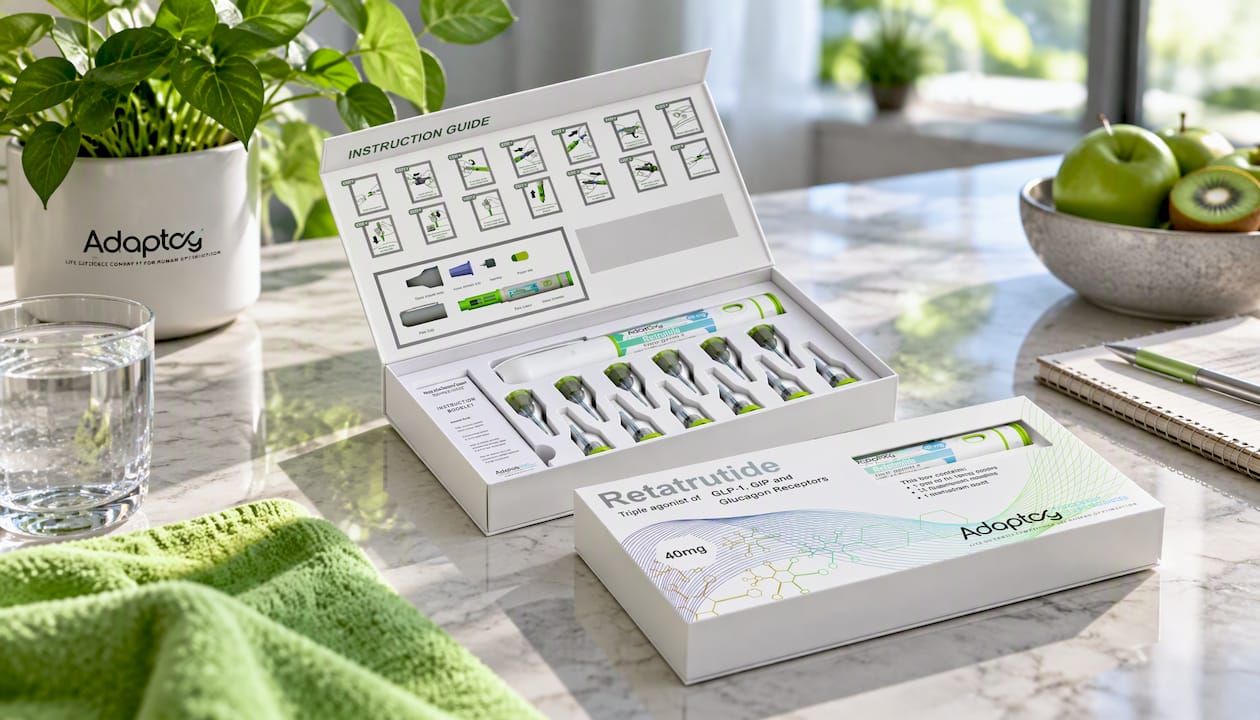
You can also read about our Retatrutide range and our Ozempic page. Pair whichever product you choose with the habits in this guide, and discuss your plan with your healthcare professional.
Planning ahead: a simple first-month checklist
Prevention beats relief. If you are about to start or increase a dose, set things up in advance.
- Stock your kitchen. Oats, beans, lentils, fruit, vegetables, whole-grain bread, plain crackers and broth cover both constipation and nausea days.
- Set a water routine. Aim for the 2 to 3 liters range, unless your clinician has given you a different target for a heart or kidney condition.
- Schedule meals. Small and regular beats large and rare.
- Plan a daily walk. Attach it to something you already do, such as after dinner.
- Ask about a stool softener. Knowing which one your pharmacist recommends means you can act on day one, not day five.
- Know your red flags. Save the warning signs above where you can find them.
- Book a check-in. Tell your clinician if symptoms continue despite these steps.
By the time you reach week five, nausea has usually settled for most people. Keep the fluid and fiber habits, because constipation can outlast it.
FAQ
Can GLP-1 medicines cause severe constipation?
It can happen. Most cases are mild to moderate, but constipation that lasts several days, or comes with vomiting, severe pain, a swollen belly or blood in the stool, needs prompt medical attention. MedlinePlus advises contacting a provider after 3 days with no bowel movement.
What clears constipation fastest on a GLP-1?
There is no instant fix, and you should avoid anything extreme. Start with fluids, fiber from food and a walk. If that is not enough, an over-the-counter stool softener or laxative is an option your pharmacist or prescriber can help you choose.
Should I keep eating if I am constipated?
Yes, in smaller portions and at regular times. Choose fiber-rich, balanced foods, eat slowly and stop when you feel full. Skipping meals tends to reduce fiber and fluid further, which can make constipation worse.
How long does GLP-1 nausea last?
Nausea is most common in the first 4 to 5 weeks and typically fades within 8 days of onset. If it continues despite smaller, blander meals, tell your healthcare professional.
Do I need to stop my medicine if I am constipated?
Do not stop or change your dose on your own. Talk to the clinician who prescribed it. They can adjust your plan, recommend a treatment for constipation or check for other causes.
Sources
- Clinical Recommendations to Manage Gastrointestinal Adverse Events (PMC, 2023)
- I Am Taking a GLP-1 Weight-Loss Medication, What Should I Know? (JAMA Internal Medicine, 2025)
- Gastrointestinal Symptoms in Obesity Therapy: Mechanisms (PMC)
- Managing the gastrointestinal side effects of GLP-1 receptor agonists (Postgraduate Medicine, 2021)
- Constipation, self-care (MedlinePlus)
- When you have nausea and vomiting (MedlinePlus)
- Ozempic constipation and delayed gastric emptying explained (Medical News Today)